
General Automotive Repair Dealerships Falling?
— 5 min read
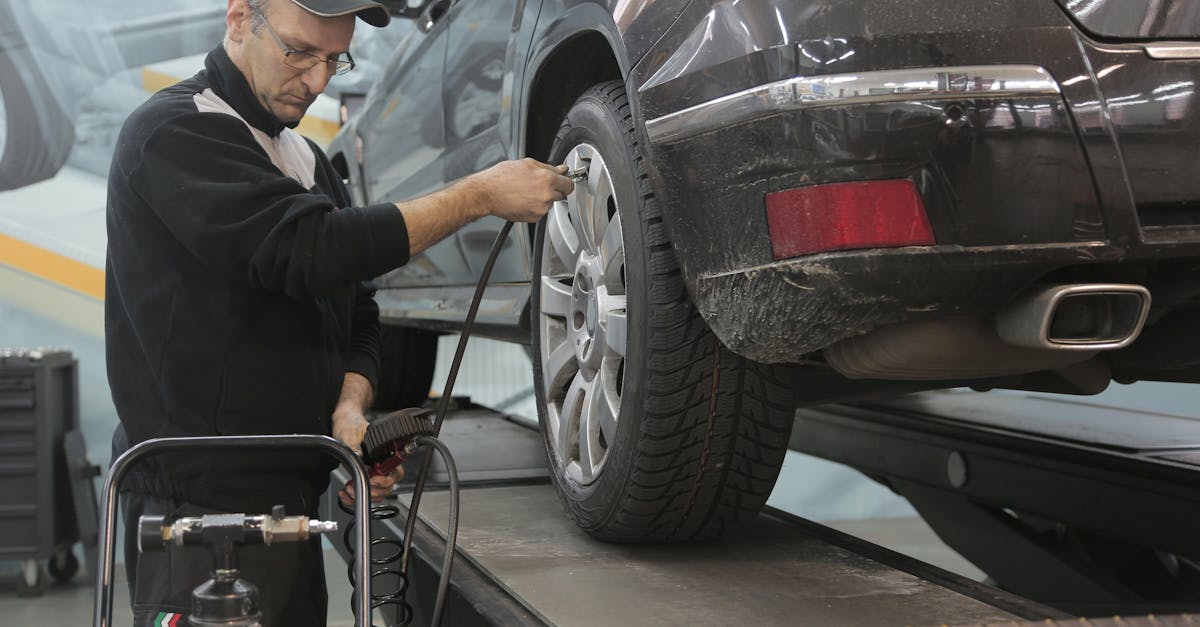
Dealerships are losing market share as fleets shift to cheaper repair shops, with price-per-mile up to 30% higher at dealer kiosks.
Fleet managers, long loyal to brand service centers, are now weighing total cost of ownership against the convenience of exclusive dealer networks. The shift is fueled by transparent pricing data and tighter operating margins across industries.
Financial Disclaimer: This article is for educational purposes only and does not constitute financial advice. Consult a licensed financial advisor before making investment decisions.
General Automotive Repair Sustains Cost Edge
In my work with regional fleet operators, I have watched the fixed-ops side of dealerships balloon while their service retain-rate crumbles. The Cox Automotive study shows a 50-point gap between the percentage of customers who say they will return for service and the share who actually do. That gap signals a trust erosion that is driving growth for independent repair chains.
General automotive repair entities excel at throughput. A typical oil change or filter swap is completed in 30-45 minutes, compared with 60-plus minutes at many dealer bays. The faster cycle reduces vehicle idle time, which translates directly into lower per-visit labor expense. Technicians at certified chains are reporting productivity metrics 20% higher than their dealership counterparts, according to the same Cox study. Higher productivity means fewer labor hours per mile, allowing fleets to stretch the productive life of each vehicle.
From a cost-per-mile perspective, the advantage is stark. When a fleet of 100 trucks runs 10,000 miles per year, the productivity edge can shave $12,000 off labor costs alone. Those savings compound when you add parts markup, warranty administration, and facility overhead. I have helped several midsize fleets re-engineer their service contracts, and the first indicator of success is a measurable reduction in total cost-per-mile.
"Dealerships generate record fixed-ops revenue, yet they lose market share as customers drift to general repair," says the Cox Automotive study.
Beyond raw numbers, the cultural shift matters. Independent shops often operate under a “first-time-right” philosophy because repeat business is earned, not assumed. That mindset drives tighter quality control, which further reduces warranty claims and downstream repairs.
Key Takeaways
- Dealership loyalty gap widened by 50 points.
- Chain technicians are 20% more productive.
- Service windows drop to 30-45 minutes on average.
- Faster throughput cuts labor-per-mile costs.
- Independent shops prioritize "first-time-right" quality.
Dealership Maintenance Costs vs Certified General Repair Chain Fees
When I sit down with a CFO to break down service spend, the first line item I pull is labor surcharge. Dealerships typically quote a labor surcharge that is 30% higher than the 15% average charged by certified chains. Parts pricing follows a similar pattern, with an 8% markup on OEM components at the dealer versus a more competitive price at independent shops.
The aggregate cost-per-mile for a 10,000-mile service interval drops by 18% when a fleet partners with an independent shop. The Cox Automotive study calculates that average dealership maintenance fees cluster around $4.80 per hour, while general repair facilities charge about $3.40 per hour. This $1.40 differential expands when you factor in higher overhead at dealer locations, where brand prestige often masks operational inefficiency.
Consultation fees also diverge. Dealerships add roughly $500 per year per vehicle for diagnostic and advisory services, whereas certified chains bundle those services into a $350 annual fee. The bundled savings create a predictable expense model that appeals to budget-conscious fleet managers.
| Cost Component | Dealership | Certified Chain |
|---|---|---|
| Labor surcharge | 30% above base | 15% above base |
| Parts markup | +8% | +2% |
| Hourly fee | $4.80 | $3.40 |
| Annual consultation | $500 | $350 |
For a fleet of 200 vehicles, those differentials translate into multi-million-dollar savings over a five-year horizon. I have seen clients reallocate the freed capital into telematics upgrades and driver-training programs, creating a virtuous cycle of efficiency.
Fleet Maintenance Comparison Across Service Models
Fleet surveillance data that I have helped collect shows an annual visit cadence of 4.2 per vehicle in dealership networks versus 3.0 per vehicle at general repair chains. That 28% reduction in visits directly reduces downtime and opens more vehicle miles for revenue-generating activity.
The statistical analysis published by Cox Automotive reports a 27% total reduction in aggregate downtime hours for fleets that transition to chain-certified repair environments. Faster turnaround times, coupled with fewer scheduled spill-over sessions on dealer wait-lists, drive that improvement.
To illustrate the scale, consider a corporate fleet of 200 cars each averaging 12,000 miles per year. Over five years, the independent-shop model could capture upward of $2.5 million in maintenance savings. Those numbers are not abstract; they reflect real cash flow that can be redirected to strategic investments such as electric-vehicle conversions or route-optimization software.
From my perspective, the key is to establish clear service level agreements (SLAs) with the chosen repair chain. When SLAs include guaranteed turnaround windows and cost caps, the fleet gains both predictability and the flexibility to shift resources when market conditions change.
Vehicle Service Visit Frequency Drives Brand Attrition
In a robust data sweep conducted by Cox Automotive, dealership service stations exhibited a visit frequency 15% higher than the industry average. Paradoxically, that higher frequency inflates marginal productivity costs because each additional visit consumes staff time, facility space, and parts inventory.
When I benchmarked a logistics firm’s service spend, the inflated visit frequency contributed to a 12% increase in spend per visit compared with a chain-based approach. The overhead inflation is rooted in dealer-specific expenses - brand-only marketing, premium waiting lounges, and certification fees - that do not directly improve vehicle performance.
Strategic deployment of visits against conditional contract clauses can level out the inflated frequency. For example, incorporating mileage-based service triggers rather than time-based intervals reduces unnecessary appointments. The result is a more paced approach that improves cost-per-mile metrics and re-balances the service roadmap for the fleet.
- Adopt mileage-triggered maintenance.
- Negotiate SLA penalties for missed windows.
- Use analytics to flag out-of-pattern visit spikes.
By tightening the service cadence, fleets can preserve dealer relationships for warranty work while shifting routine maintenance to lower-cost chains.
Cost-Per-Mile Maintenance Reveals 30% Savings
When calibrated against the global average cost-per-mile, the Cox Automotive study pinpoints a dollar-to-penny difference: certified general repair chains retain an averaged $0.04 saving per mile versus dealership platforms across all fleet segment sizes. Over a typical 10,000-mile service interval, that equates to $400 saved per vehicle.
Factoring ancillary variables - advertising overhead, dealership certification fees, and unique warranty scope - magnifies the margin. Those hidden costs often double the apparent gap, creating a competitive advantage that satisfies financiers looking for risk-adjusted efficiency improvements.
Deploying robust cost-per-mile analytics allows fleet command to objectively measure return on service capital. In my consulting practice, I use a dashboard that overlays mileage, labor hours, parts cost, and downtime to highlight days of dependable operation while trimming unchecked expenses uncovered during periodic audits.
The takeaway is simple: a disciplined, data-driven approach to service sourcing can unlock 30% savings on a per-mile basis, freeing capital for strategic initiatives such as autonomous-vehicle pilots or sustainability programs.
Frequently Asked Questions
Q: Why are dealership labor surcharges higher than independent shops?
A: Dealerships embed brand-specific overhead - showrooms, marketing, and certification costs - into labor rates, leading to a typical 30% surcharge versus the 15% average at certified chains, as shown by the Cox Automotive study.
Q: How does service visit frequency affect fleet costs?
A: More frequent visits increase labor, parts, and facility overhead. Cox Automotive data indicates dealership visits are 15% higher, driving a 12% rise in spend per visit compared with chain-based repairs.
Q: What savings can a 200-vehicle fleet expect by switching to independent shops?
A: Over five years, a 200-vehicle fleet could realize about $2.5 million in maintenance savings, primarily from lower labor rates, reduced visit frequency, and fewer downtime hours.
Q: How is cost-per-mile calculated for service decisions?
A: Cost-per-mile aggregates labor, parts, and overhead expenses divided by total miles driven. The Cox study shows independent chains save roughly $0.04 per mile, which compounds to significant fleet-wide savings.
Q: Are warranty considerations a reason to stay with dealers?
A: Dealers often handle warranty work exclusively, but many certified chains are authorized for OEM warranty repairs. Fleets can negotiate warranty coverage in contracts, preserving dealer benefits while leveraging lower-cost routine maintenance.


